

Table of Contents
Could one simple change to your child’s bedroom unlock more independence, safer sleep, and stronger motor skills?
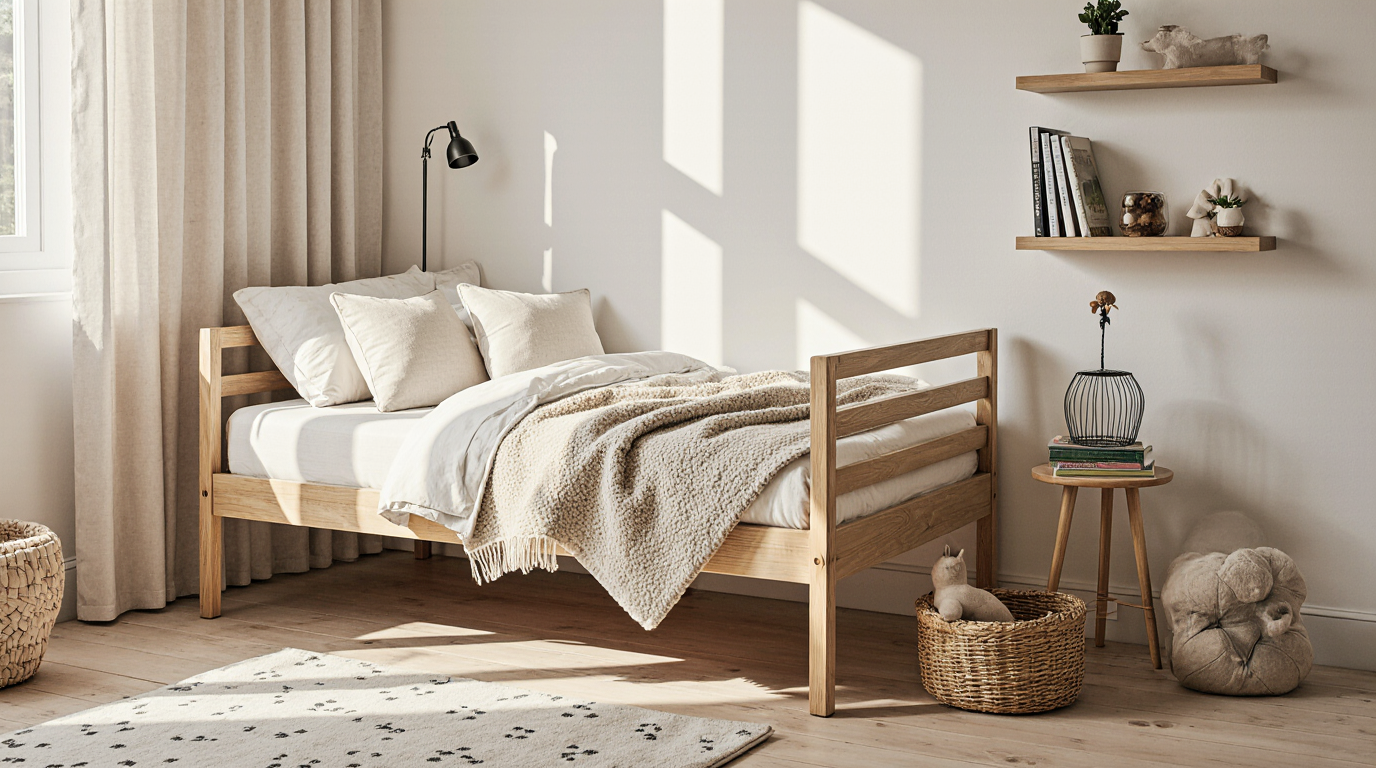
A Montessori bed is a low-to-floor or floor-level sleeping solution that lets your child get in and out on their own. Unlike a traditional crib with high rails, a Montessori bed removes barriers to movement and supports self-directed routines from an early age.
This guide is written for U.S. parents and caregivers who want practical, developmentally sound sleep choices. You’ll learn what a Montessori bed is, its 7 core benefits, the main design types including the montessori floor bed and montessori bed with rails and a safety-first plan for making the switch.
What Is a Montessori Bed? Definition and Core Principles
A Montessori bed is a low sleeping option a mattress on the floor, a platform a few inches off the ground, or a minimal wooden frame. The design stays simple and uncluttered so your child can explore without barriers.
Maria Montessori’s philosophy places independence and freedom within limits at the center of child development. Applying that to sleep means creating a space your child can access and navigate on their own. No tall rails, no step stools just a child-sized environment that fits their scale.
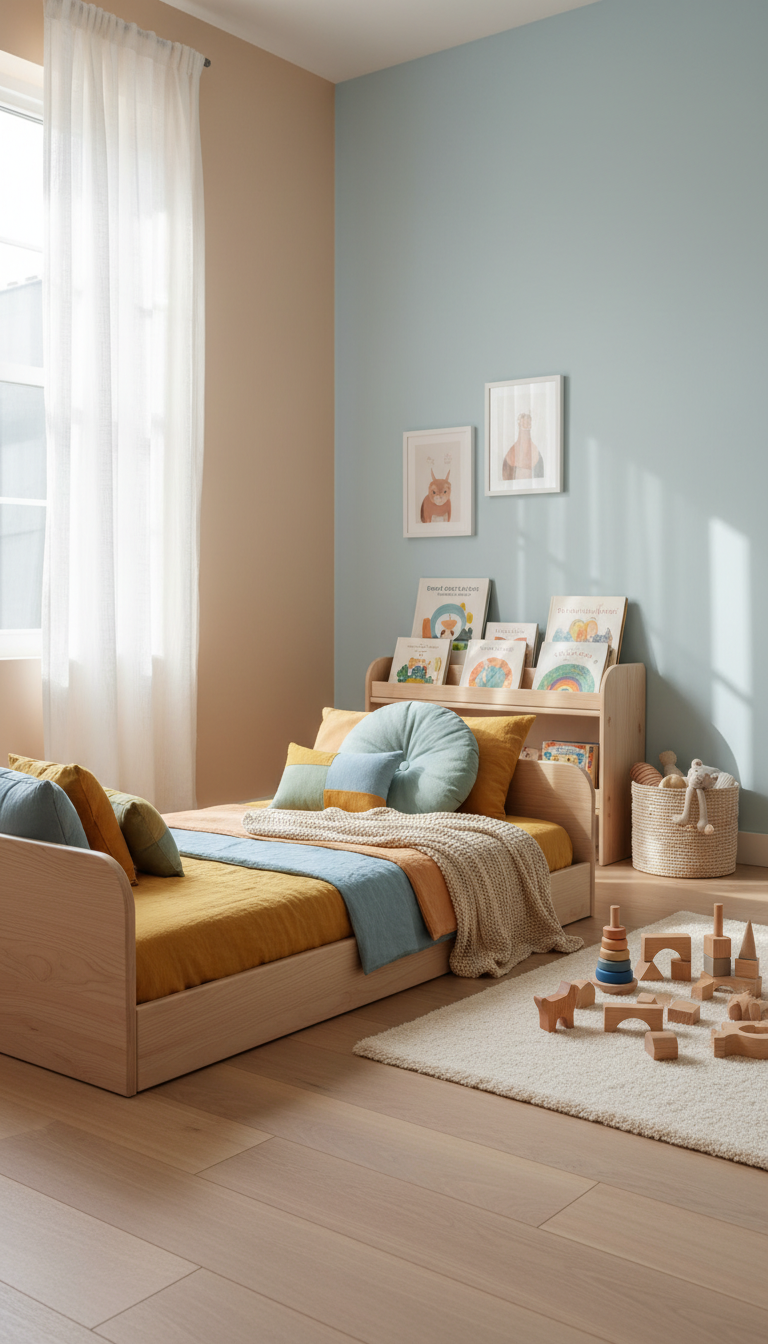
Pediatricians and Montessori educators generally recommend waiting until a child shows steady mobility sitting, crawling, and pulling to stand before transitioning to a Montessori floor bed.
7 Key Benefits of a Montessori Bed
1. Builds Independent Sleep Habits
A Montessori bed removes the crib rail barrier. Your child chooses when to get in and out of bed. This ownership over bedtime routines builds decision-making skills and often leads to faster adoption of healthy sleep habits a finding supported by many Montessori practitioners and parents alike.
2. Reduces Fall Risk Compared to Cribs
For toddlers who climb, a traditional crib becomes a fall hazard. A Montessori toddler bed sits inches from the floor, dramatically reducing the distance and injury risk of any tumble. The American Academy of Pediatrics (AAP) advises firm sleep surfaces and back-sleeping for infants under 12 months for older infants who reliably roll and sit, a Montessori bed is a sound next step.
3. Strengthens Gross Motor Skills
Getting in and out of a Montessori bed stepping up, stepping down, crawling across a rug builds balance and coordination daily. These repeated movements develop the gross motor skills that support walking, climbing, and physical confidence.
4. Develops Spatial Awareness
Navigating a room-level sleeping environment helps children judge distances, learn about personal space, and understand their physical relationship with the world around them. A montessori floor bed makes the entire room part of the learning space.
5. Supports Self-Soothing
When a child wakes at night and can safely return to bed on their own without calling for a parent or risking a fall they begin to develop self-soothing strategies. This is one of the most cited long-term advantages parents report after switching to a Montessori bed.
6. Creates a Consistent, Predictable Routine
Because the sleep environment is accessible and unchanging, children know exactly what to expect each night. Routine and predictability are cornerstones of Montessori methodology. A stable sleep space reinforces the same calm consistency that structured Montessori classrooms provide.
7. Grows With Your Child
A montessori bed adapts easily. Start with a crib mattress on the floor, add a low frame, then upgrade to a twin as your child grows. The same core setup scales across toddlerhood and beyond without major reinvestment.
Montessori Bed Types and Design Options
Montessori Floor Bed vs. Elevated Toddler Bed
| Feature | Montessori Floor Bed | Elevated Toddler Bed |
|---|---|---|
| Fall risk | Minimal | Low but present |
| Accessibility | Easiest | Slightly harder |
| Airflow & dust | More dust exposure | Better airflow |
| Under-bed storage | None | Possible |
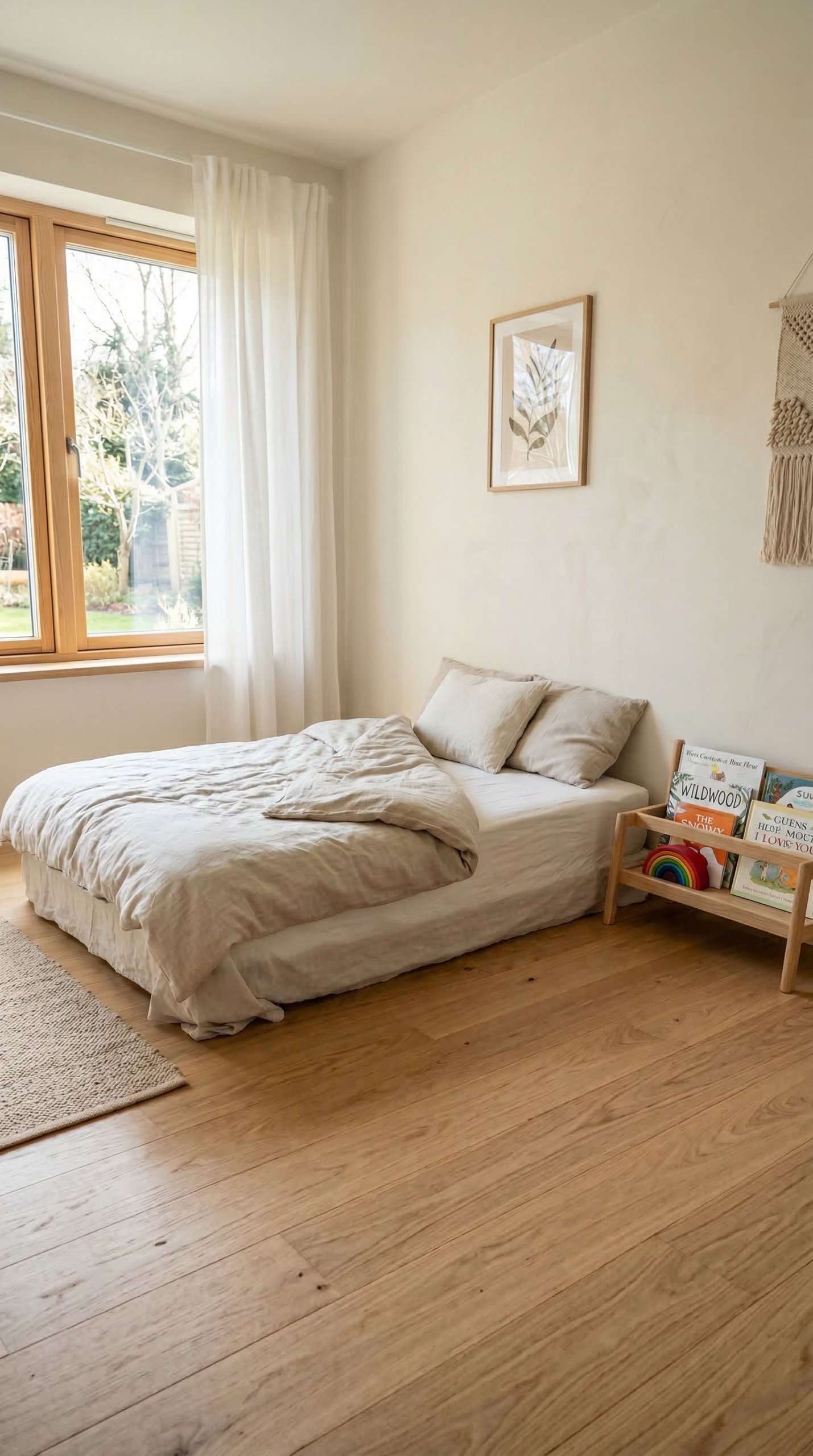
A Montessori floor bed a mattress flat on the floor or a 2.4 inch platform is the purest expression of Montessori design. An elevated toddler bed offers better airflow and easier cleaning at the cost of a small added height.
Montessori Toddler Bed Sizing
Common sizes: crib/toddler mattress (28″ × 52″) and twin (38″ × 75″). Always ensure there is zero gap between the mattress and any frame to eliminate entrapment risk. Low headboards and minimal or no footboards are ideal.
Montessori Bed With Rails Pros and Cons
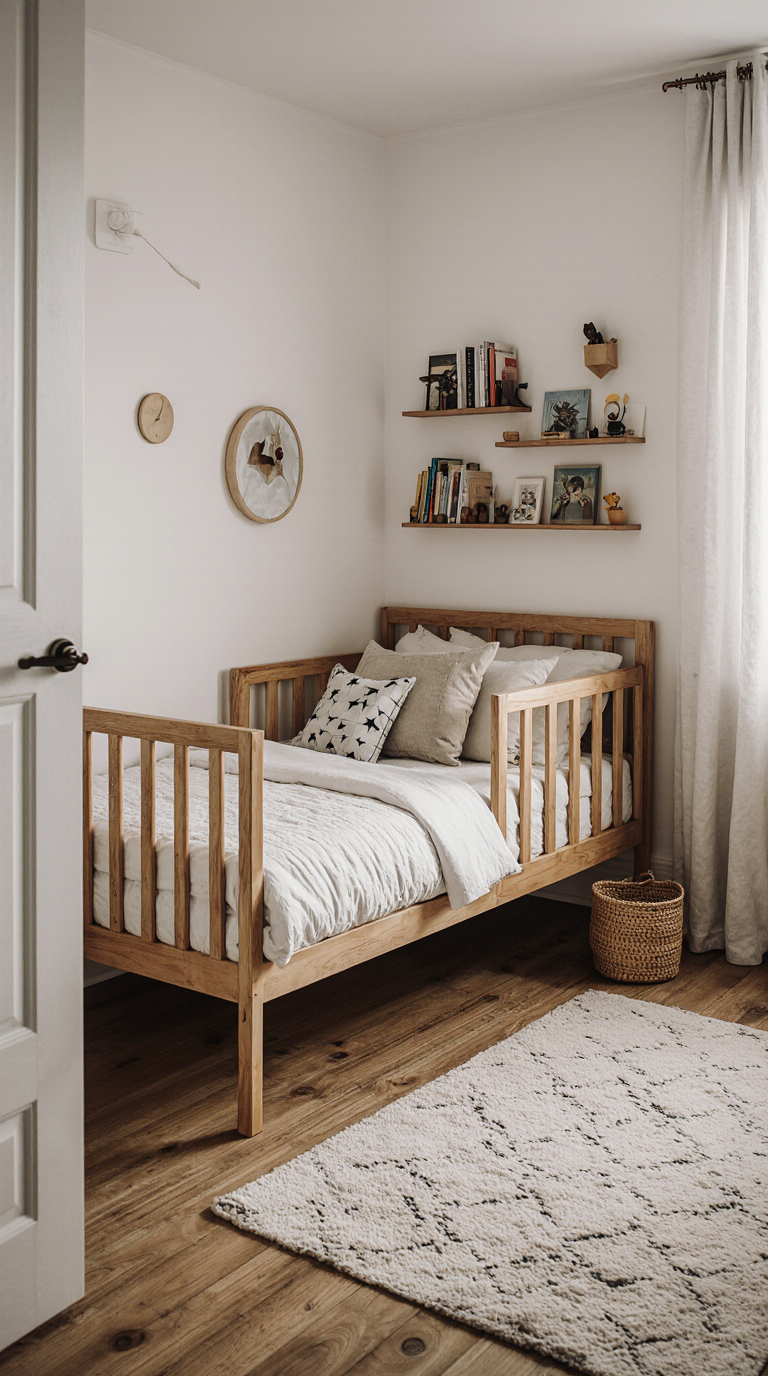
A montessori bed with rails can ease the transition for anxious parents or active sleepers. Low, removable guard rails provide a soft boundary without trapping the child. The trade-off: poorly designed rails can limit movement or invite climbing. If you use rails, choose breathable, low-profile designs that attach securely and meet ASTM or JPMA safety standards.
Materials and Finishes
Solid woods like maple, birch, and oak offer durability and a clean look. Plywood with non-toxic sealants is a budget-friendly alternative and if you enjoy hands-on projects, these balcony furniture DIY ideas can spark creative ways to repurpose wood pieces for your child’s room too. Look for Greenguard Gold or CertiPUR-US certifications for mattresses to ensure low VOC emissions.
How to Transition to a Montessori Bed Safely
When to Make the Switch
Watch for these readiness signals: climbing out of the crib, sitting steadily, crawling, standing, and following simple instructions. In the U.S., most children transition between 18 and 36 months. For babies under 12 months, follow AAP safe-sleep guidelines without exception.
Room Layout for a Child-Centered Space
- Place the montessori bed near the door for easy access
- Add low shelves at child height for books and toys (see our Montessori bedroom setup guide for a full checklist)
- Leave wide, clear pathways around the bed
- Place a small water cup on a reachable table
- Remove cords, small objects, and climbing hazards
Safety Checklist Before Transition
- Anchor tall furniture to walls with anti-tip straps
- Cover all electrical outlets
- Install cordless blinds and pad sharp corners
- Position the montessori bed away from windows, radiators, and heaters
- Use a firm, certified mattress with no gaps to the frame
- Test smoke and carbon monoxide detectors
Bedding and Mattress Recommendations
Choose a firm mattress with a fitted sheet. For toddlers, use lightweight blankets and avoid loose bedding or soft pillows. Brands like Naturepedic and Moonlight Slumber offer certified organic options ideal for a montessori bed setup.
Helping Your Child Adjust
Start with daytime naps in the new bed. Keep bedtime routines identical to what your child knows. Use simple, positive language about the new space. Set one clear rule stay in the room until morning. Most children adjust within two to four weeks with consistent, calm responses to nighttime exits.
Conclusion
A montessori bed is more than a low frame it’s a developmental tool. It supports independence, builds motor skills, reduces fall risk, and creates the kind of predictable, child-centered environment that Montessori principles are built on.
Whether you choose a montessori floor bed, a montessori toddler bed, or a montessori bed with rails, the key is matching the design to your child’s age, mobility, and room layout then setting up the space safely before day one. Check your child for readiness signals, choose a certified mattress, anchor the furniture, and stay consistent with routines.
With thoughtful planning, a Montessori bed becomes one of the most impactful changes you can make to your child’s bedroom one that supports their growth for years.
FAQ
What is a montessori bed and how is it different from a crib?
A montessori bed sits low to the floor with no high rails, letting your child get in and out independently. A crib keeps a child contained. The montessori design prioritizes accessibility and freedom of movement over containment.
When is it safe to transition to a montessori bed?
Most children are ready between 18 and 36 months when they can sit, crawl, stand, and follow simple instructions. The AAP advises keeping babies under 12 months in a firm, flat, clutter-free sleep surface.
Does a montessori bed cause more night wakings?
It may at first. Children quickly learn that freedom comes with boundaries. Consistent routines and calm responses to nighttime exits train most children to stay in the room within a few weeks.
What mattress size works for a montessori bed?
Start with a crib mattress (28″ × 52″) and upgrade to a twin (38″ × 75″) as needed. Always choose a firm, well-fitting mattress with a recognized certification like CertiPUR-US or Greenguard Gold.
Can infants under 12 months use a montessori floor bed?
Generally, no. Always follow AAP safe-sleep guidelines for infants under 12 months. Consult your pediatrician before any earlier transition.
[…] a related note: if you’re also rethinking your bedroom setup for kids, exploring Montessori bed benefits for children can be a smart complement to your whole-home sleep […]