

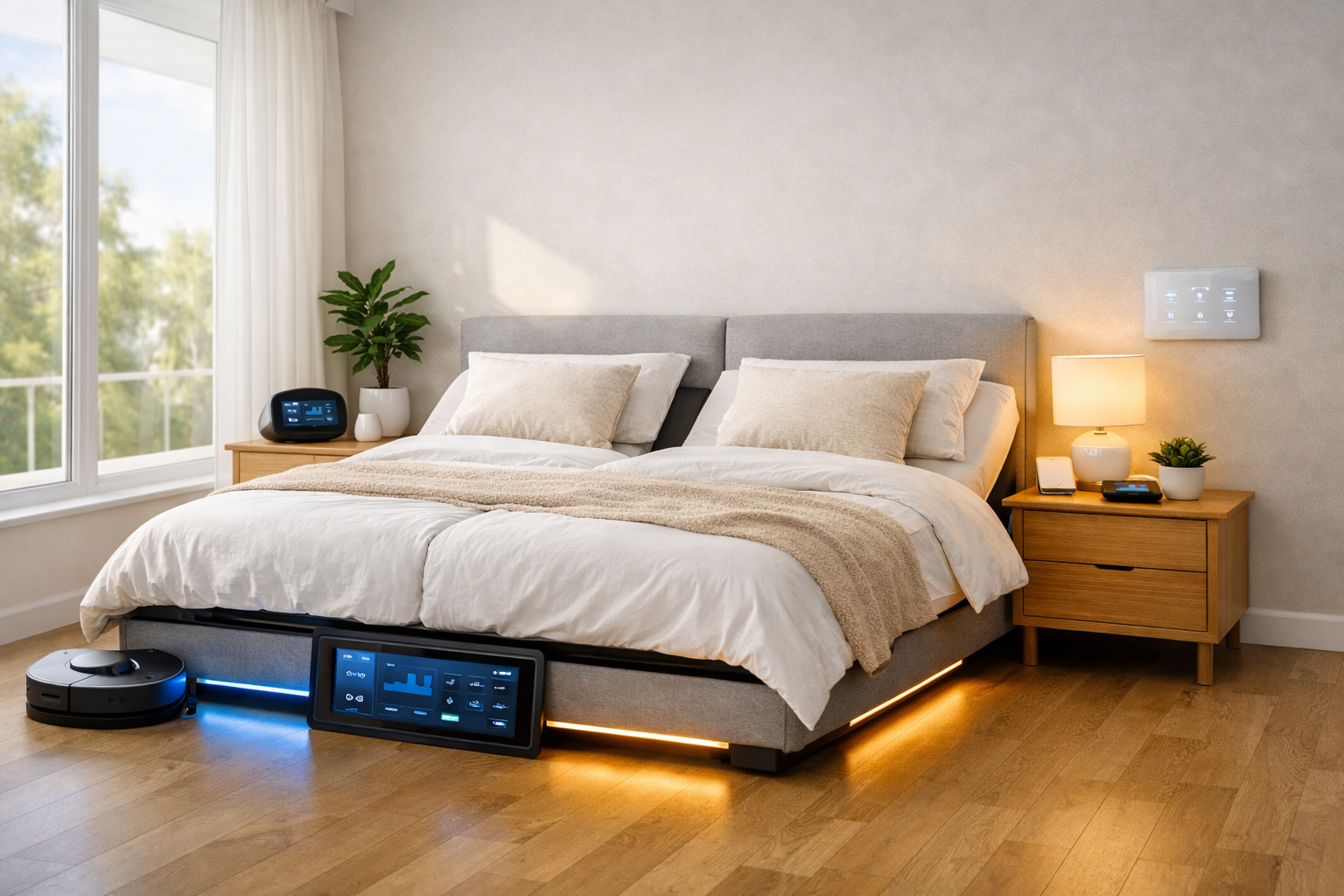
A smart bed with sleep tracking is changing how we sleep by combining comfort with intelligent technology. Imagine waking up every morning actually feeling rested no grogginess, no guesswork. With a smart bed with sleep tracking, you get clear data, smarter comfort, and a system that works with your body, not against it.
A smart bed with sleep tracking makes this possible. And in 2026, the technology has never been more advanced or more accessible.
Whether you’re dealing with insomnia, snoring, restless nights, or just want to understand your sleep better, this guide covers everything you need to know before you buy.
A smart bed with sleep tracking is a connected mattress system that uses built-in sensors and AI to monitor your sleep patterns, adjust firmness or temperature automatically, and send personalized sleep insights to your phone all without wearing any device to bed.
This makes a smart bed with sleep tracking one of the most advanced sleep solutions available today
Table of Contents
1. What Is a Smart Bed with Sleep Tracking?
A smart bed with sleep tracking is not just a fancy mattress. It is a complete sleep system that combines comfort engineering with health technology.
These beds use sensors woven into the fabric or embedded in the base to detect movement, breathing rate, heart rate, and body temperature all while you sleep. The data is processed by AI and sent to a companion app on your phone.
From there, the bed can automatically adjust firmness on each side, heat or cool different zones, raise your head to reduce snoring, and even set a smart alarm that wakes you at the lightest point of your sleep cycle.
Expert Insight: According to sleep science research, the quality of your sleep not just the quantity has a direct impact on memory, metabolism, immune function, and mood. A sleep tracking mattress gives you the data to improve quality, not just hours in bed.
According to the Sleep Foundation, adults need 7 to 9 hours of quality sleep per night yet most people have no reliable way to measure whether they are actually achieving it.
The global smart bed market was valued at USD 2.8 billion in 2024 and is projected to reach USD 7.27 billion by 2034. That is not a fad it is a major shift in how people approach rest and health at home.
2. How Does a Smart Bed with Sleep Tracking Work?
Most people picture a fitness tracker or a sleep app when they think of sleep monitoring. A smart mattress goes much further and you don’t need to wear anything.
Here’s a simplified breakdown of how it works:
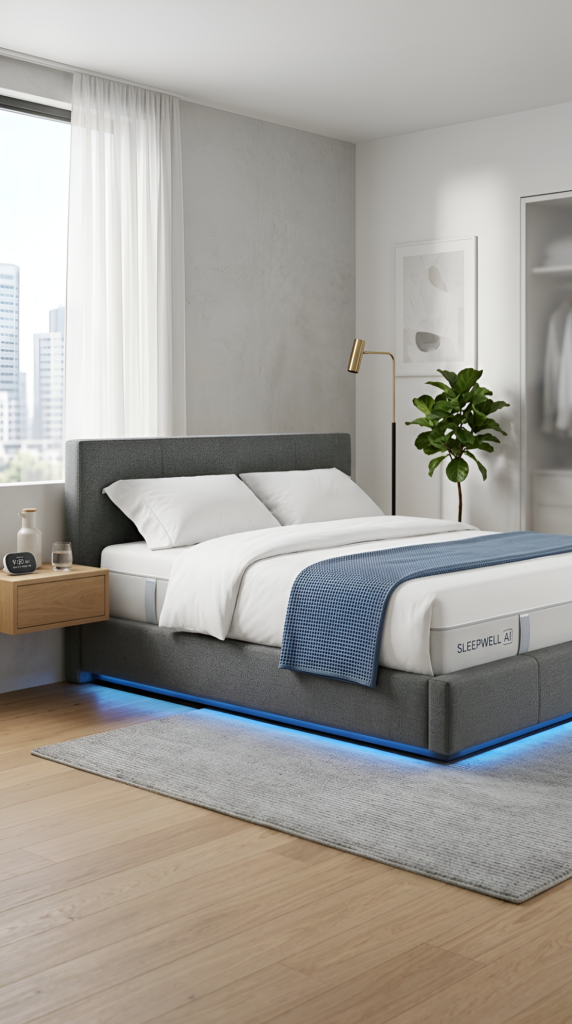
- Pressure sensors detect your position and movement throughout the night.
- Biometric sensors measure heart rate and breathing rate through the mattress surface.
- Temperature sensors track your body heat and regulate the climate of your sleep zone.
- AI algorithms process all this data and identify your sleep stages (light, deep, REM).
- The app delivers a daily sleep score, actionable tips, and trend data over time.
Some models also connect to smart home devices. Your bed can trigger your thermostat to lower the temperature at bedtime, or gradually brighten your smart lights to wake you gently.
This is what makes a smart bed with sleep tracking so powerful compared to traditional mattresses.
Pro Tip: Look for smart beds that provide a daily sleep score with breakdown by stage (light, deep, REM). This gives you much more useful data than a simple “hours slept” number.
Overall, a smart bed with sleep tracking replaces guesswork with real data, helping you understand and improve your sleep quality over time.
3. Nine Proven Smart Bed Benefits You’ll Actually Notice
Still on the fence? Here are the smart bed benefits that real users experience backed by the technology’s core functions. The biggest advantage of a smart bed with sleep tracking is how it transforms your nightly experience into measurable, actionable improvements.
A. You Get Personalized Sleep Data Every Single Morning
Instead of guessing why you feel tired, your bed tells you. You’ll see your sleep cycles, restless periods, and even how your heart rate changed overnight. This data helps you spot patterns like how a late coffee or stressful day affects your rest.
B. Automatic Comfort Adjustments While You Sleep
AI-powered smart beds learn your preferences over time. If you tend to sleep hotter in the second half of the night, the bed can cool down your zone automatically without you pressing a single button.
C. Snoring Reduction That Actually Works
Many best smart beds 2026 models include an anti-snore feature that gently raises the head of the bed a few degrees when snoring is detected. This opens the airway without waking the sleeper.
D. Dual-Zone Climate Control for Couples
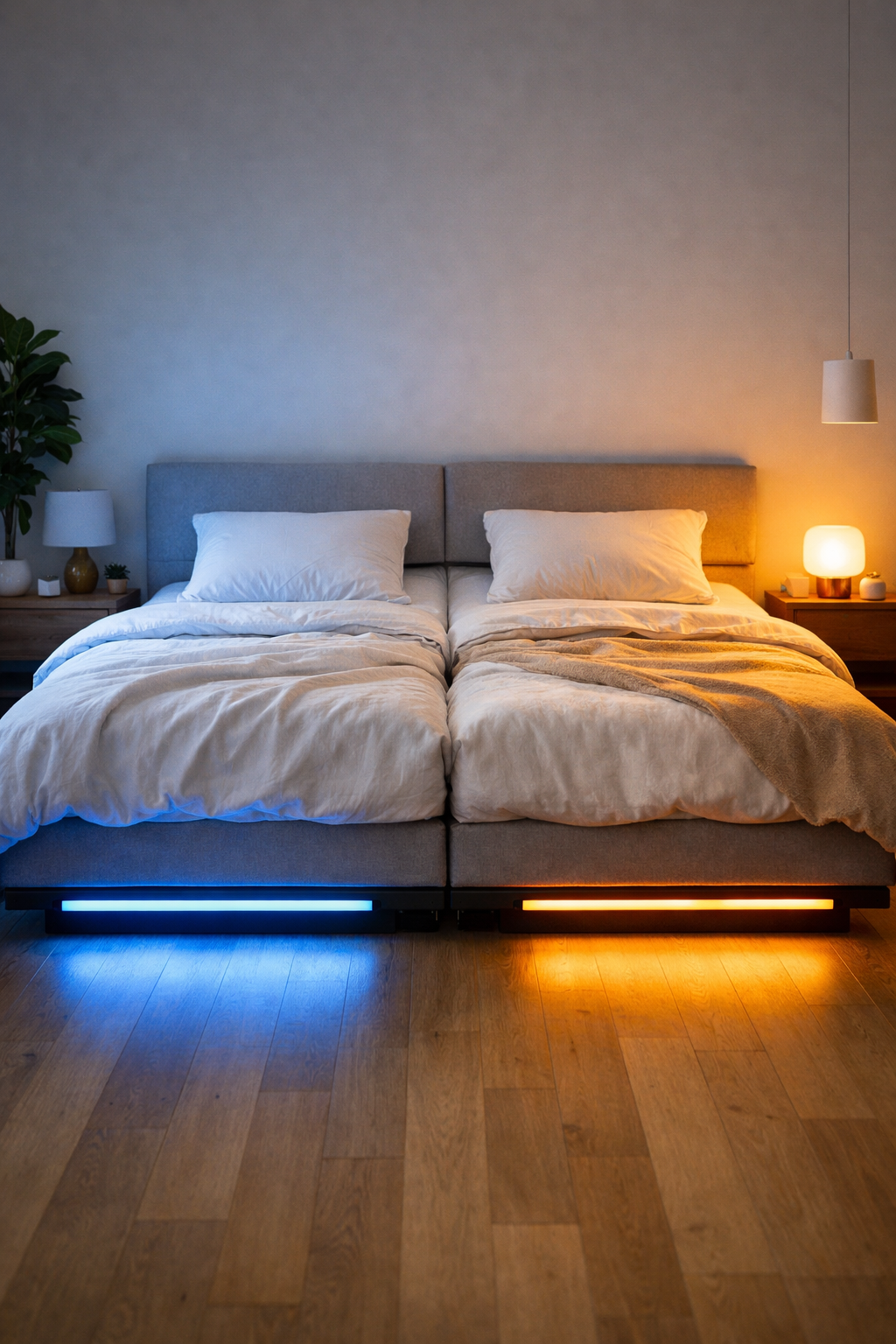
If your partner runs hot while you sleep cold, a split smart bed solves the problem permanently. Each side maintains its own temperature no more blanket wars.
E. Heart Rate and Breathing Monitoring Without Wearables
Getting biometric data without a watch or chest strap is a game-changer. The mattress picks it all up passively. For anyone who finds wearables uncomfortable at night, this is a huge advantage.
F. Smarter Wake-Up Alarms
A smart alarm wakes you during light sleep not in the middle of a deep cycle. This small change can make a massive difference in how alert and refreshed you feel in the morning.
G. Long-Term Health Trend Awareness
Over weeks and months, your AI smart bed builds a picture of your health trends. Elevated resting heart rate? Changes in breathing? These are signals your bed can surface before they become serious health concerns.
H. Integration with Your Smart Home
Top models connect to Alexa, Google Home, or Apple HomeKit. Set a bedtime routine that dims the lights, locks the doors, and sets the bed temperature all with one voice command or automated schedule.
I. Better Sleep Hygiene Through Accountability
Seeing your sleep score every morning creates healthy accountability. Just like a step counter motivates walking, a daily sleep score motivates better bedtime habits earlier lights-out, less screen time, and more consistent schedules.
Overall, a smart bed with sleep tracking turns your sleep into measurable, improvable performance.
Ready to Find Your Perfect Smart Bed?
Use the checklist below to compare features, ask the right questions, and make a confident buying decision.
4.Top Smart Bed with Sleep Tracking Features to Look For in 2026
Not all smart mattress features are equal. Here are the ones that genuinely improve sleep versus the marketing extras that sound impressive but rarely get used. Choosing the right smart bed with sleep tracking depends on understanding which features actually improve your sleep and which are just marketing hype.
Must-Have Features
- Sleep stage tracking (light, deep, REM breakdown)
- Heart rate and breathing monitoring
- Automatic firmness adjustment per side
- Temperature regulation (active heating and cooling)
- Anti-snore response (head elevation)
- Smart alarm (wakes you in light sleep)
- Mobile app with daily scores and long-term trends
Nice-to-Have Features
- Smart home integration (Alexa, Google, HomeKit)
- Under-bed lighting for nighttime navigation
- Sleep fit or wellness coaching inside the app
- Partner separation (dual-zone everything)
Features That Sound Good But Rarely Deliver
- “Future-ready” smart home integration (confirm it works now)
- Vague “AI-powered insights” with no clinical backing
- App subscriptions required for basic features
Warning: Some brands market features as “coming soon” or “smart-ready.” Always ask for a live demo of any smart home integration before buying. What’s listed on a box and what works in your home can be very different.
5. How to Choose the Right Smart Bed (Step-by-Step Buyer’s Guide)
Buying a smart bed with sleep tracking is a significant investment. It’s not just about comfort it’s about improving your long-term health and daily performance.
Follow these steps to avoid buyer’s remorse.
Step 1 Define Your Sleep Goals
Start by asking: What problem am I trying to solve? Snoring, insomnia, back pain, temperature regulation, or simply wanting better data? Your primary goal should drive every other decision.
Step 2 Set a Realistic Budget
Entry-level smart beds start around $1,000–$1,500. Mid-range models with dual-zone climate control run $2,000–$4,000. Premium AI-powered models can reach $8,000+. Decide your ceiling before you start browsing showroom upsells are very effective in this category.
Step 3 Research Compatibility with Your Existing Setup
Do you already use Alexa, Google Home, or Apple HomeKit? Confirm with a live demo if possible that the bed integrates seamlessly with what you already own. Don’t rely on “works with” badge claims alone.
On a related note: if you’re also rethinking your bedroom setup for kids, exploring Montessori bed benefits for children can be a smart complement to your whole-home sleep strategy.
Step 4 Scrutinize the Privacy Policy
Your smart bed collects highly personal biometric data heart rate, breathing patterns, and sleep cycles every single night. Ask specifically: Where is this data stored? Who has access? Is it sold to third parties? Look for GDPR or HIPAA compliance mentions, and review trusted sources like Mayo Clinic guidance on sleep disorders.
Step 5 Check Warranty and Support Carefully
Support quality varies dramatically by brand. Look for:
- At least 10-year mattress warranty
- Clear policy on technology component coverage (sensors, pumps, app access)
- Sleep trial period of at least 100 nights
- Software update commitments in writing
Step 6 Install and Configure Properly
Most smart beds pair with an app via WiFi or Bluetooth in under 15 minutes. Place the bed away from large metal objects that can interfere with sensors. Allow 2–4 weeks for the AI to learn your patterns before judging the data.
Step 7 Read and Act on Your Sleep Data
The data is only valuable if you use it. Check your app weekly. Look for trends. Experiment earlier bedtime, less alcohol, cooler room temperature and see how your sleep score responds. This feedback loop is where real improvements happen.
💡 Pro Tip: Sync your smart bed with your smart thermostat using IFTTT or a similar automation platform. Program it to drop 2–3 degrees when you go to bed. Studies consistently show cooler rooms produce deeper sleep.
6. Seven Common Pitfalls and How to Avoid Them
The smart bed market is exciting but it also has real gaps that savvy buyers need to understand. Even though a smart bed with sleep tracking offers impressive benefits, there are still important limitations you need to understand.
Here’s what most brand websites won’t tell you.
Pitfall 1: No Independent Accuracy Verification
Most brands claim their sleep tracking is “highly accurate” but there are virtually no independent, peer-reviewed studies confirming this. The data is useful for trends, but it does not replace a clinical sleep study. For deeper insights, refer to National Institutes of Health sleep research.
Pitfall 2: Data Privacy Blind Spots
Many brands are vague about encryption, third-party data sharing, and what happens to your data if you cancel a subscription. This is a legitimate concern press brands for specific answers.
Pitfall 3: Integration Disappointment After Updates
“Works with Google Home” today does not guarantee it works with Google Home after the next firmware update. Smart home compatibility is fragile. Check community forums for real-world integration stories.
Pitfall 4: Hidden Subscription Costs
Some brands lock advanced sleep insights behind monthly or annual subscriptions. Your $3,000 bed may need a $15/month subscription to access the features that sold you on it. Read the fine print.
Pitfall 5: Sensor Durability Is Unclear
Industry reports note that public data on sensor lifespan, motor durability, and frame longevity is nearly nonexistent. A mattress might last 10 years while the technology inside becomes obsolete in 3–5.
Pitfall 6: Customer Support Can Be Slow
Tech-enabled mattresses introduce tech-style support problems firmware bugs, connectivity drops, app crashes. Traditional mattress brands are not always equipped for rapid digital support. Read third-party reviews specifically about support experiences.
Pitfall 7: One-Size-Fits-All Doesn’t Apply
The “best” smart bed depends entirely on your sleep goals, home setup, partner preferences, and budget. There is no universal winner. Anyone claiming otherwise is selling you something.
7. Smart Bed Feature Comparison Table
Use this table as a quick reference when comparing brands during your research phase.
| Feature / Aspect | Availability | Reliability Level | Watch Out For |
|---|---|---|---|
| Sleep Stage Tracking | Most premium models | Medium | No peer-reviewed validation |
| Heart Rate Monitoring | Mid to high-end models | Good | Accuracy varies by position |
| Temperature Regulation | Premium models | Good | Dual-zone costs more |
| Anti-Snore Feature | Select models | Medium | Not a substitute for sleep apnea treatment |
| Smart Home Integration | Claimed widely | Variable | Verify with a live demo |
| Data Privacy Controls | Rarely detailed publicly | Low | Ask about encryption + sharing |
| Warranty Coverage (Tech) | Inconsistent | Variable | Sensors may not be covered |
| Subscription Cost | Common on higher-end models | — | Read fine print before buying |
| Price Transparency | Rarely public | — | Request itemized quotes |
This comparison helps you choose the right smart bed with sleep tracking based on real features and limitations.

8. Who Needs a Smart Bed with Sleep Tracking Most?
A smart bed with sleep tracking is not for everyone, but for the right person, it can be life-changing. Here’s a quick breakdown:
You’ll Love It If You Are…
- Someone who wakes up tired despite “enough” hours of sleep
- Health-conscious and interested in biometric data trends
- A couple with different temperature or firmness preferences
- Dealing with mild snoring or restless sleep
- A data-driven person who responds to numbers and scores
- Already invested in a smart home ecosystem
You Might Want to Wait If You Are…
- On a tight budget (good sleep hygiene is free)
- Dealing with diagnosed sleep apnea (consult a doctor first)
- Deeply concerned about biometric data privacy
- Happy with your current sleep and just want a comfortable mattress
“Sleep is the single most effective thing you can do to reset your brain and body health each day.” Matthew Walker, PhD, sleep scientist and author
If you’re approaching sleep as part of a broader home wellness strategy, you might also find value in exploring DIY balcony furniture ideas creating a relaxing outdoor space to unwind before bed is one of the simplest and most effective sleep hygiene habits.
Take the Next Step Toward Better Sleep
Compare smart bed features, request demos, and read privacy policies before you commit. Your best sleep is closer than you think.
9. Frequently Asked Questions
What is a smart bed with sleep tracking?
A smart bed with sleep tracking is a connected mattress system that uses embedded sensors and AI to monitor your sleep stages, heart rate, and breathing then sends personalized sleep reports and adjustments to a companion app on your phone, all without any wearable device.
Are smart beds with sleep tracking actually accurate, and how reliable is a smart bed with sleep tracking in real-world use?
Smart beds provide useful trend data but should not be compared to clinical-grade sleep lab analysis. Most brands report high accuracy, but independent peer-reviewed studies are not widely available. Use the data to spot patterns and improvements, not as a medical diagnosis tool.
What happens to my sleep data is it private?
Data practices vary significantly by brand. Many companies do not publicly disclose their full encryption standards or third-party sharing policies. Always request a brand’s privacy policy, and look for GDPR or HIPAA compliance before buying, especially if you’re storing sensitive biometric health data.
Can a smart bed help with snoring?
Yes many smart beds include an anti-snore feature that detects snoring sounds and gently raises the head of the bed a few degrees to open the airway. This helps with positional snoring. However, it is not a treatment for sleep apnea, which requires medical consultation.
Do smart beds work with Alexa, Google Home, or Apple HomeKit?
Many smart beds advertise smart home compatibility, but actual integration quality varies. Always request a live demonstration with your specific devices before purchasing. Real-world compatibility is often inconsistent, especially after software updates.
How long do smart beds typically last?
The mattress itself can last 8–10 years. The embedded technology sensors, pumps, and connectivity may have a shorter lifespan of 3–7 years. Ask each brand specifically about technology component warranties and their update roadmap before committing.
How much does a smart bed with sleep tracking cost, and what should you expect when buying a smart bed with sleep tracking?
Entry-level smart beds start around $1,000–$1,500. Mid-range models with dual-zone climate control typically cost $2,000–$4,000. Premium models with full AI functionality can exceed $8,000. Some also require ongoing app subscriptions for advanced features.
What are the best smart mattress features to prioritize?
Prioritize sleep stage tracking, heart rate monitoring, temperature regulation, anti-snore response, and a smart alarm. If you share a bed, dual-zone climate control is a must-have. Confirmed smart home integration (not just claimed) is a valuable bonus.
Final Verdict: Is a Smart Bed with Sleep Tracking Worth It?
A smart bed with sleep tracking is one of the most powerful upgrades you can make for your sleep, health, and overall quality of life. It combines smart technology with personalized comfort to help you sleep deeper and wake up more refreshed every day.
The technology is genuinely impressive. The benefits better data, smarter comfort, snore reduction, and long-term health awareness are real. But the market still has gaps around privacy transparency, independent accuracy validation, and sensor durability that demand careful attention.
Our honest recommendation: Define your sleep goals first. Set a clear budget. Press every brand with tough questions about privacy, warranties, and real-world integrations. Take advantage of sleep trials. And don’t let marketing hype rush a decision that will affect 8 hours of every single day of your life.
Sleep smarter. Invest wisely. Your body will thank you every morning. If you’re serious about improving your rest, investing in a smart bed with sleep tracking could be the smartest decision you make this year.